
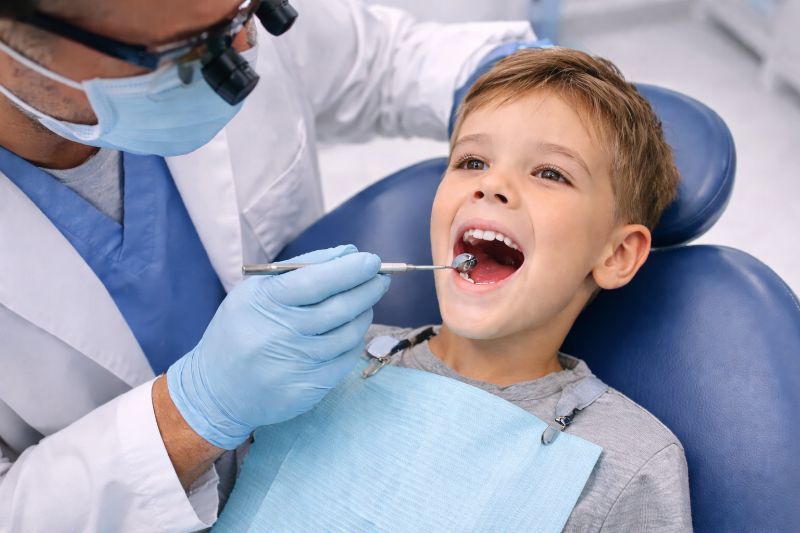

“Every six months” is the standard advice that most people have received since childhood. It rolls off the tongue of dental professionals so automatically that few patients ever stop to ask why. Is it supported by evidence? Is it truly right for everyone?
The answer, as with most things in evidence-based medicine, is nuanced.
Where the “Every Six Months” Rule Comes From
The twice-yearly recommendation gained widespread adoption in the United States largely through a mid-20th century Pepsodent toothpaste advertising campaign — not a specific clinical trial. However, the interval has since been the subject of considerable research, and the evidence generally supports it as a reasonable baseline — with important caveats about individual risk stratification.
What Happens at a Dental Checkup That Cannot Be Done at Home?
Three things occur at a professional cleaning and examination that no home care regimen can replicate:
Tartar removal. Plaque that is not removed by brushing and flossing within 24–72 hours mineralizes into tartar (calculus). Tartar cannot be removed by brushing — it requires professional instrumentation. Tartar buildup below the gumline is the primary driver of periodontal disease progression.
Radiographic monitoring. Digital X-rays detect cavities between teeth, bone level changes from gum disease, root abnormalities, and developing pathology — all of which are invisible on visual examination. The early detection window these provide is irreplaceable.
Oral cancer screening. Oral cancer claims approximately 54,000 lives in the United States annually, with a 5-year survival rate under 50% when detected late but over 80% when detected early. A systematic oral cancer examination at every checkup costs nothing extra and takes less than two minutes. Patients who attend regular checkups benefit from ongoing monitoring; those who do not are discovered at more advanced stages.
Who Should Come Every Six Months?
Every six months is appropriate for low-risk adults with:
- No history of significant gum disease
- Low cavity incidence
- Excellent home oral hygiene
- No dry mouth, no systemic disease affecting oral health, no smoking
Who Should Come More Often?
Every three to four months is the appropriate interval for patients with:
- A history of periodontal disease. The bacteria that cause periodontitis recolonize pocket surfaces within 90 days. A six-month interval allows reinfection to establish before the next cleaning.
- Active orthodontic treatment, which creates plaque traps that require closer monitoring.
- Poorly controlled diabetes, which impairs the immune response to oral bacteria.
- Dry mouth from medications or medical conditions, which dramatically increases cavity risk.
- Chemotherapy or radiation therapy affecting the head and neck.
- High cavity activity (multiple new cavities per year despite good hygiene).
- Heavy smoking.
- Pregnancy (at minimum an additional cleaning in the second trimester).
What About Annual Visits?
For genuinely low-risk patients with exceptional home care and a history of cavity-free, disease-free checkups over many years, some evidence supports extending the interval to annual or even every 18–24 months for certain populations. This is an individualized recommendation — made by a dentist who knows the patient’s history — not a unilateral decision a patient should make without professional input.
The Cost of Skipping Appointments
The most common response I hear from patients who have not been in two or three years is: “I was going to come eventually — I just kept putting it off.” The outcomes I see from multi-year avoidance are consistently more expensive and more complex than the care that would have been needed at the two-year mark.
A filling detected at six months costs $150–$300. The same cavity left to grow for two years may require a crown ($800–$1,500) or root canal plus crown ($1,800–$3,000). Gingivitis caught at a routine cleaning reverses with a $150–$200 professional cleaning and improved home care. Periodontitis requires scaling and root planing ($600–$1,200) followed by lifetime periodontal maintenance every three to four months.
The math is not subtle: preventive dentistry is dramatically cheaper than restorative dentistry. Every routine cleaning you attend is an investment in avoiding a much larger future expense.
The Practical Answer
For most adults: every six months is correct as a baseline. For patients with any of the risk factors listed above: every three to four months is medically appropriate and cost-effective. For a small subset of highly stable, low-risk adults monitored over years by a dentist who confirms their status: annual visits may be acceptable.
The right frequency for you specifically is a conversation to have with your dentist — not a decision to make unilaterally. Book the appointment, get a current evaluation, and let that evaluation inform the recommended interval. That is evidence-based preventive care.