Gum disease — or periodontal disease — is a bacterial infection of the gum tissue and supporting bone surrounding your teeth. It begins as gingivitis (reversible inflammation) and can progress to periodontitis (irreversible bone loss) if left untreated. Nearly half of adults over 30 in the United States have some form of periodontal disease, making it the leading cause of tooth loss in adults.
Beyond tooth loss, untreated gum disease is linked to serious systemic health conditions including heart disease, diabetes complications, stroke, and pregnancy complications. Treating it is not just about saving teeth — it is about protecting your overall health.
Deep Scaling & Root Planing
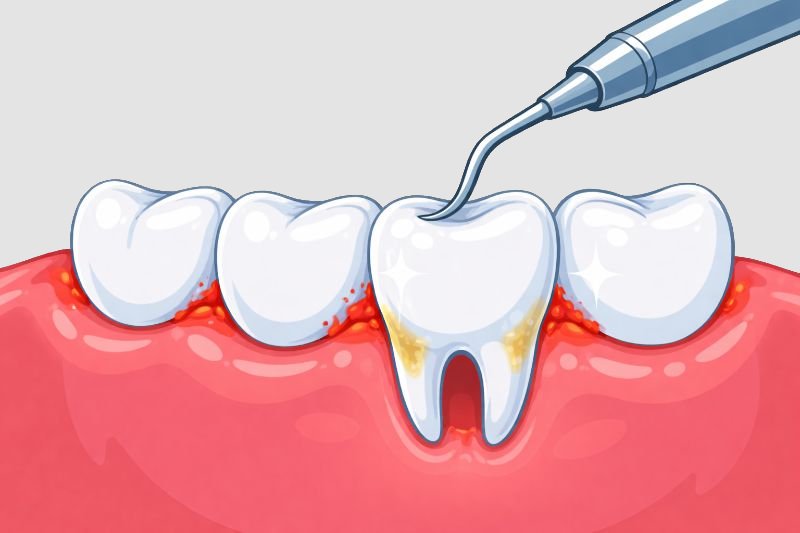
Unlike a routine cleaning that addresses the tooth surface above the gumline, deep scaling removes bacterial deposits from below the gumline — inside the periodontal pockets. Root planing smooths the root surfaces to prevent bacteria from reattaching. Treatment is performed quadrant by quadrant, with local anesthesia for comfort, typically over two to four appointments.
Diode Laser Therapy
Our diode laser targets and eliminates the bacteria lining the infected gum pocket with precision that hand instruments alone cannot achieve. Laser therapy also promotes healing of the surrounding tissue and reduces post-treatment sensitivity. It is performed immediately following scaling and root planing in moderate to advanced cases.
Local Antibiotic Therapy
For stubborn pockets, we may place Arestin (minocycline microspheres) directly into the periodontal pocket at the time of treatment. The antibiotic is released slowly over 21 days, continuing to fight bacteria long after the appointment.
Ongoing Maintenance
After completing active treatment, periodontal maintenance appointments every 3–4 months are essential to prevent disease from recurring. These appointments include a targeted cleaning, pocket depth re-charting, and monitoring of your long-term response to treatment.