Modern dentures bear little resemblance to the bulky, ill-fitting prosthetics of a generation ago. Today’s dentures use advanced acrylic resins, high-strength flexible materials, and precise digital fabrication to deliver prosthetics that are lighter, thinner, and significantly more natural-looking than traditional options.
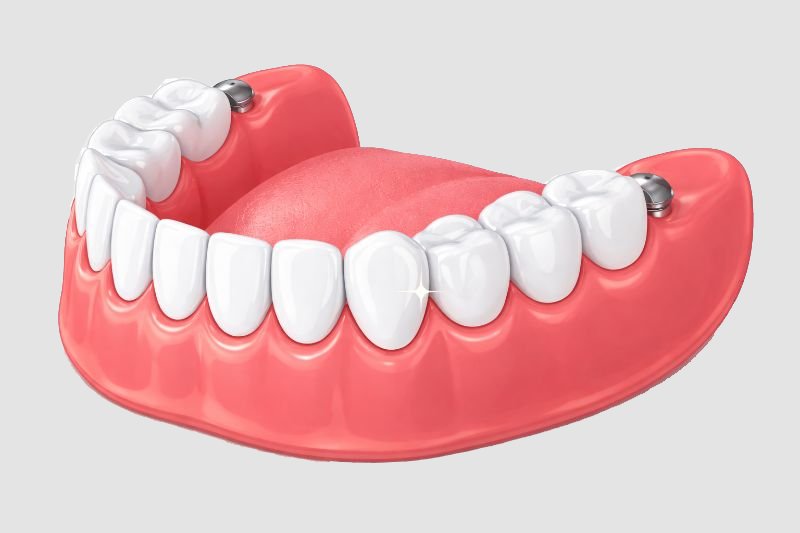
At Dentist, we offer full dentures (for completely edentulous patients), partial dentures (for patients with some remaining natural teeth), and implant-supported overdentures (for patients who want the stability of implants without the cost of a full fixed restoration).
Full vs. Partial Dentures
A full denture replaces all teeth in the upper, lower, or both arches. It rests on the gum tissue and, in the upper arch, uses suction to stay in place. A partial denture replaces several missing teeth while clasping onto existing natural teeth for retention. Partials are removable and can be fabricated in acrylic, cast metal, or flexible Valplast material.
Implant-Supported Overdentures
The most significant limitation of conventional dentures is stability — they can slip or rock during eating and speaking. An implant overdenture solves this by snapping onto two to four dental implants placed in the jaw. This dramatically improves chewing efficiency, eliminates the need for adhesive, and slows bone loss. Implant overdentures are the single most impactful upgrade available for denture wearers and are significantly more affordable than a full fixed implant arch.
Getting Used to Dentures
Expect an adjustment period of two to four weeks as your muscles and tissues adapt. Minor sore spots are common in the first few weeks and are easily resolved with a brief adjustment appointment. Most patients adapt fully and regain comfortable chewing function within one month of delivery.
Maintenance & Relines
Dentures should be cleaned daily with a soft brush and non-abrasive denture cleanser. As the jawbone changes shape over time, dentures may require a reline (refitting of the internal surface) every 3–5 years to maintain a proper fit. A poorly fitting denture accelerates bone loss and causes sore spots — regular checkups ensure your denture continues to fit optimally.