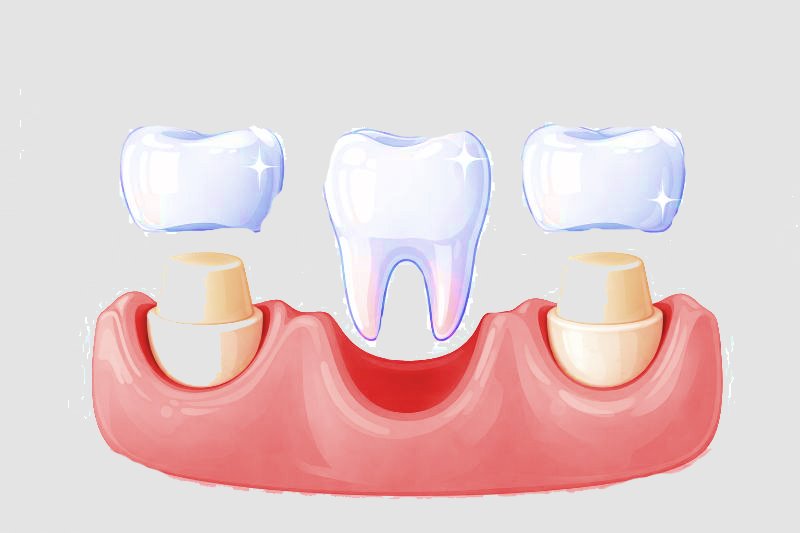
A dental bridge is a fixed prosthetic that literally “bridges” the gap created by one or more missing teeth. It consists of one or more artificial teeth (pontics) held in place by dental crowns cemented onto the adjacent natural teeth or implants on either side of the gap. Unlike dentures, a bridge is permanently fixed and cannot be removed.
Replacing missing teeth promptly is important not just for aesthetics and chewing function — when a tooth is lost, the surrounding teeth begin to drift toward the gap, the opposing tooth can over-erupt, and the underlying jawbone begins to shrink. A bridge prevents all of these consequences.
Traditional vs. Implant-Supported Bridges
A traditional bridge uses the natural teeth adjacent to the gap (called abutment teeth) as anchors. These teeth are prepared by removing a layer of enamel and fitted with crowns that anchor the bridge. This approach is well-suited for patients with healthy neighboring teeth who need a faster, lower-cost solution than implants.
An implant-supported bridge uses dental implants instead of natural teeth as anchors — preserving the adjacent teeth entirely. For patients missing multiple consecutive teeth, an implant-supported bridge provides the most stable and bone-preserving outcome.
Materials & Aesthetics
We fabricate bridges from porcelain-fused-to-zirconia or full-zirconia — no metal substructure, no dark gumline shadows. The pontic is designed to sit gently on the gum tissue, giving the appearance of a natural tooth emerging from the gum.
Caring for Your Bridge
While a bridge replaces the tooth, it does not replace the need to clean beneath it. We provide floss threaders and recommend a water flosser to clean under the pontic daily. Without this hygiene step, decay can develop at the abutment teeth and the bridge may fail prematurely.