

No procedure in dentistry is more feared and more misunderstood than root canal therapy. Surveys consistently show that the phrase “you need a root canal” is one of the most dreaded things a patient can hear in a dentist’s office. The fear is so pervasive that it functions as cultural shorthand for awful, painful experiences.
And it is almost entirely based on outdated information.
Modern root canal therapy, performed by a skilled clinician with current technology, is comparable in discomfort to receiving a filling. The patients who tell me root canals are not painful are the ones who actually had one recently. The patients who are convinced they are terrible are almost always working from decades-old reputation or secondhand stories.
Here are the five myths I spend the most time correcting.
Myth 1: Root Canals Are Extremely Painful
Reality: The pain you feel before a root canal is far worse than anything that happens during the procedure.
The pain associated with a root canal is the infected tooth — the throbbing, pressure, and sensitivity to heat and cold that drives patients to the emergency appointment in the first place. The procedure eliminates that pain. It does not create it.
Modern local anesthetics are highly effective. For most patients, the procedure is entirely comfortable once anesthesia is established. For teeth with acute infection, achieving complete numbness can occasionally require supplementary anesthetic — and a well-trained clinician knows how to manage this. Post-procedure soreness for 24–72 hours is normal and manageable with over-the-counter analgesics.
Myth 2: It Is Better to Just Extract the Tooth
Reality: Extraction creates a new set of problems. Saving the natural tooth is almost always the better outcome.
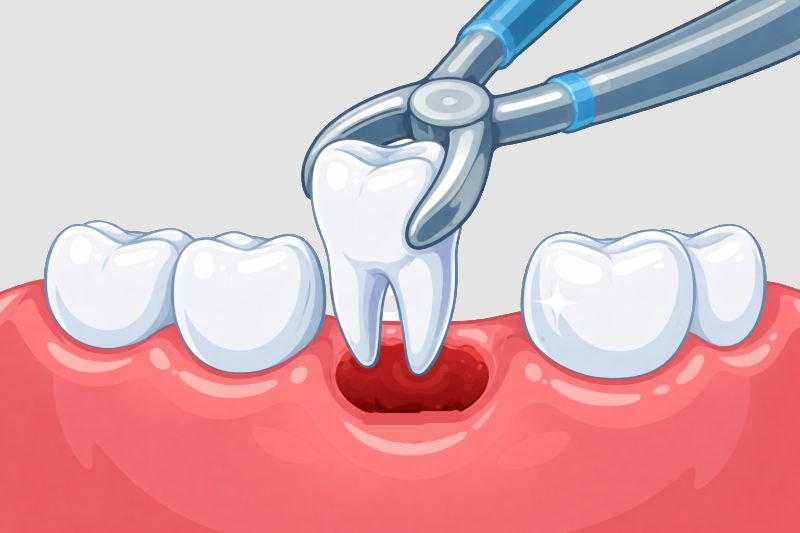
Every time a tooth is extracted without being replaced, the adjacent teeth begin to drift toward the gap, the opposing tooth over-erupts, the jawbone at the extraction site shrinks, and chewing function is compromised. Replacing the extracted tooth — with an implant, bridge, or partial denture — costs more than the root canal and crown would have. And nothing fully replicates a natural tooth.
Root canal therapy, followed by a crown, saves the natural tooth, preserves bone, maintains bite alignment, and provides decades of normal function. Extraction is appropriate when the tooth cannot be saved — but that determination should be made after careful evaluation, not because of fear of the procedure.
Myth 3: A Root Canal Kills the Tooth
Reality: Root canal therapy removes infected or inflamed tissue — but the tooth remains anchored in the jaw by its surrounding ligament and bone.
The term “dead tooth” is sometimes applied to a root canal-treated tooth because the pulp tissue (the nerve and blood supply inside the canals) has been removed. However, the tooth is still very much a functional, living structure — it remains embedded in the jaw, receives nutrients from the periodontal ligament, and performs its chewing function normally. A crown placed after root canal therapy protects the tooth and routinely provides decades of continued service.
Myth 4: Root Canals Cause Illness or Cancer
Reality: This claim originated from research conducted over 100 years ago that has been thoroughly and repeatedly debunked.
In the 1920s, Dr. Weston Price proposed a “focal infection” theory suggesting that root canal-treated teeth harbored bacteria that spread disease throughout the body. This theory was rejected by the dental and medical community within decades based on subsequent rigorous research. There is no credible scientific evidence that root canal therapy causes systemic disease, cancer, or any other illness.
The American Association of Endodontists and mainstream medical and dental organizations worldwide are unambiguous on this point. If you have read claims online suggesting otherwise, you have encountered misinformation. Please discuss specific concerns with your dentist rather than making treatment decisions based on debunked theories.
Myth 5: If the Tooth Doesn’t Hurt Anymore, the Infection Is Gone
Reality: A tooth can stop hurting because the nerve has died — but the infection remains and continues to spread into surrounding bone.
When a tooth infection progresses to the point of killing the pulp tissue, the pain often stops. Patients sometimes interpret this as the problem resolving on its own. It has not. The infection continues to spread into the periapical bone, forming an abscess that can be seen on X-rays even when the patient feels no pain. Left untreated, periapical abscesses can expand, weaken the surrounding bone, and in rare cases spread to deeper tissues.
The absence of pain is not a sign that a dental infection has resolved. If your dentist has recommended a root canal on a tooth that is not currently painful, it means they have identified infection on your X-rays that requires treatment — not that the recommendation is unnecessary.
What Root Canal Treatment Actually Involves
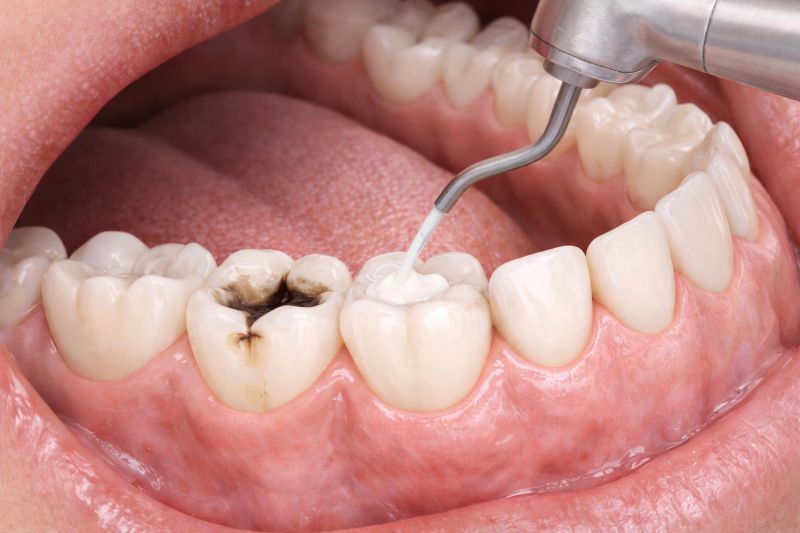
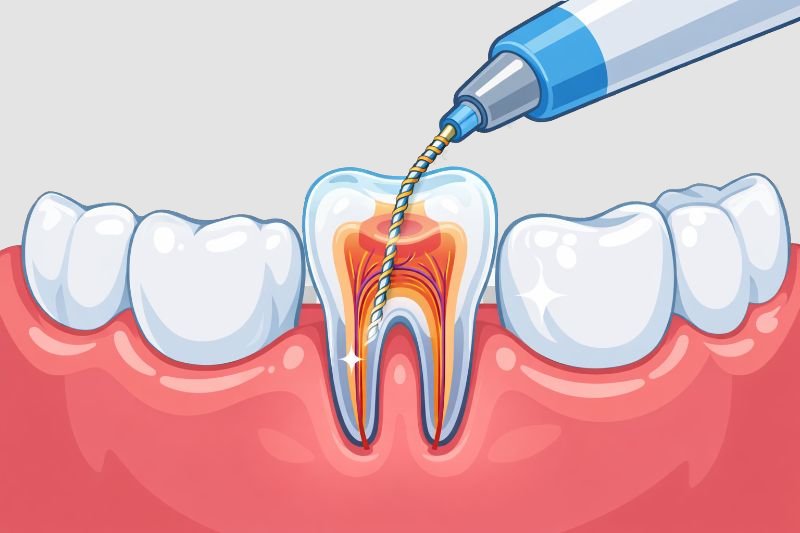
The procedure begins with thorough anesthesia — you should be completely numb before any instrumentation begins. An access opening is made through the crown of the tooth. The infected or inflamed pulp tissue is removed from each canal using small nickel-titanium files. The canals are shaped and irrigated with antimicrobial solution to eliminate residual bacteria. The cleaned canals are filled and sealed with a biocompatible rubber material called gutta-percha. A temporary or permanent filling seals the access, and a crown is recommended within a few weeks to protect the treated tooth.
The procedure takes one to two hours depending on the number of canals. Post-appointment soreness, if present, typically resolves within 72 hours.
The Bottom Line
If your dentist or endodontist has recommended root canal therapy, the conversation you should be having is not “should I do this?” — it is “when can I schedule this?” Every week of delay allows the infection to progress. And every patient who has completed root canal therapy in my practice has said some version of the same thing: “I can’t believe I waited so long. That wasn’t nearly as bad as I thought it would be.”