

Dental anxiety is not a character flaw. It is a real, documented psychological response affecting an estimated 36% of adults — and a genuine dental phobia, involving avoidance and significant distress, affects another 12%. Together, that means nearly half of all adults have some level of fear associated with dental care. In my practice, I hear the same things repeatedly: “I know I should come more often, but I just can’t bring myself to do it.”
The consequence of avoidance is always the same: small problems become large ones, large ones become emergencies, emergencies require more extensive treatment — which reinforces the fear and starts the cycle over. Breaking the cycle requires understanding the options that modern dentistry offers for anxious patients, and finding a practice that takes your anxiety seriously rather than dismissing it.
Understanding the Roots of Dental Anxiety
Dental anxiety typically originates from one of several sources:
A traumatic past experience. A painful extraction as a child, an unempathetic dentist, or a procedure that went unexpectedly — these experiences create conditioned fear responses that persist into adulthood.
Loss of control. The dental chair is one of very few situations where another person works inside your body while you lie reclined and largely unable to communicate. For many people, this inherent vulnerability is the core trigger.
Fear of pain. Often based on outdated experiences. Modern local anesthesia and technique have transformed dentistry. Most routine procedures, performed correctly, involve little to no pain during the procedure itself.
Embarrassment. Patients who have avoided the dentist for years often feel shame about the state of their teeth and fear judgment. This shame is a significant driver of continued avoidance — and entirely unwarranted. We have seen everything. Our job is to help, not judge.
Mental Strategies That Help
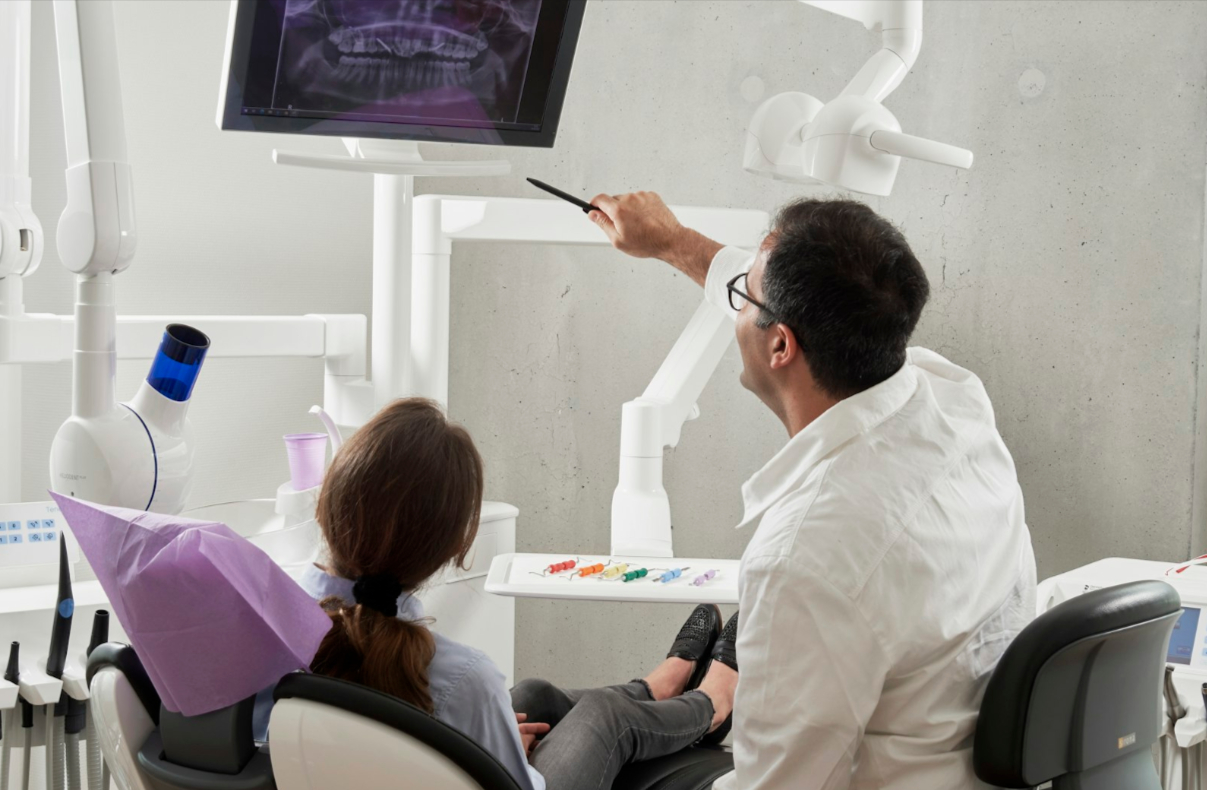
Tell us upfront. The single most effective thing an anxious patient can do is tell the dentist and staff before the appointment begins. When we know, we adjust our approach — more explanation, slower pace, more frequent check-ins. When we don’t know, we proceed at a standard pace that may feel overwhelming.
Establish a stop signal. Agree on a hand signal — usually raising the left hand — that means “stop everything immediately.” Having this agreed-upon control mechanism significantly reduces anxiety in many patients because it removes the feeling of helplessness. We honor it without question, every time.
Ask for step-by-step narration. Many anxious patients find it calming to know exactly what is about to happen before it happens. Tell us you want to know each step in advance. “I’m going to gently dry the tooth with air — you’ll feel a cool stream.” Anticipation of a sensation is much less distressing than an unexpected one.
Bring headphones. Listening to music, a podcast, or an audiobook during treatment is an underused strategy that works remarkably well. It reduces awareness of procedural sounds (drilling, suction), provides a mental distraction, and gives the patient something familiar to anchor to. Bring noise-canceling headphones for maximum effect.
Breathing and pacing. Slow, controlled breathing — four seconds in, hold two, six seconds out — activates the parasympathetic nervous system and measurably reduces anxiety. Practice this in the waiting room before your appointment.
Sedation Options for Anxious Patients
When cognitive strategies are not enough, sedation dentistry provides reliable, safe options.
Nitrous oxide (laughing gas) is the mildest and most widely used sedation option. It is inhaled through a small nose mask and produces a pleasant relaxed sensation within minutes. Nitrous oxide reduces anxiety without putting you to sleep, wears off completely within 5 minutes of removing the mask, and allows you to drive yourself home. It is safe, well-studied, and available for virtually all patients.
Oral sedation involves taking a prescription anti-anxiety medication (typically triazolam or diazepam) 30–60 minutes before the appointment. It does not eliminate consciousness but produces a deep state of relaxation and, in many patients, significant amnesia about the procedure. You will need a driver. Oral sedation is appropriate for moderate to severe anxiety and for patients who dislike the mask required for nitrous.
IV sedation delivers sedative medications directly into the bloodstream for immediate, precise effect. You remain conscious but deeply relaxed and typically have little to no memory of the procedure. IV sedation is the standard for complex oral surgery — including wisdom tooth removal — and for patients with severe dental phobia. It requires a licensed anesthesia provider and a driver, and involves brief post-procedure monitoring.
Finding the Right Practice
Not every dental practice is equipped or trained to care for anxious patients well. Look specifically for a practice that lists anxiety management or sedation dentistry as a featured service, has reviews from anxious patients describing positive experiences, offers an unhurried consultation before any treatment, and does not dismiss or minimize your concerns when you raise them.
The right dentist will never make you feel embarrassed for being anxious, never pressure you to proceed faster than you are comfortable, and will customize your care around your needs — not their schedule.
A Note on Avoidance
Every year that passes without dental care significantly increases the complexity and cost of the eventual treatment. Gum disease progresses. Cavities deepen. Cracked teeth fracture. The fear of what the dentist might find is often worse than the reality — and the reality, however difficult, is always better addressed sooner.
If anxiety has kept you away from the dentist, I want to say this clearly: we can help you, and we will not judge you. The first step is just calling and being honest about your anxiety. Everything else can be figured out from there.